Fire Risk Assessments: How Often Are They Legally Required, and What Should They Cover?
Key Takeaways
- The law in England and Wales requires a fire risk assessment to be suitable and sufficient and to be updated, but does not state a date for an annual review.
- Review it regularly and, if necessary, after significant changes which may make the findings of the assessment unreliable.
- Hazards that could cause a fire; people at risk; means of escape; fire detection; fire action equipment; fire safety equipment; fire safety measures to prevent accumulation of excess flammable materials; fire action signs and general fire precautions including staff training and fire procedures.
Introduction
Fire poses a significant threat to life, property and business. To manage fire risk effectively, all businesses need appropriate measures to protect their employees, visitors and premises. Fire risk assessment software can help identify potential fire hazards and measures to mitigate the risks and ensure people can escape in the event of an outbreak.
Understanding what a fire risk assessment is and how often it should be completed, as well as what it should contain, will enable businesses to ensure they are meeting their legal obligations and managing their fire risks effectively. Businesses can also use assessment software and fire safety software to organise safety records, assign corrective actions and schedule regular reviews.
How often are fire risk assessments legally required?
Under the Regulatory Reform (Fire Safety) Order 2005, the Responsible Person must make a “suitable and sufficient” assessment and review it regularly to keep it up to date. The law does not prescribe a fixed annual interval for every building.
Home Office guidance recognises an annual review as good practice for small, simple premises. Other buildings need a frequency based on their size, complexity and level of risk. Set a review date, but act sooner if circumstances change.
When should you review an assessment early?
Review promptly after:
- Building work or a change of use.
- Changes to occupancy, staffing or evacuation needs.
- New machinery, processes or dangerous substances.
- A fire, near miss, alarm failure or inspection finding.
- Deterioration in doors, escape routes or protection systems.
A review may confirm that findings remain valid, check completed actions and record updates. If the assessment is no longer reliable, arrange a fresh one with a competent assessor.
What should a fire risk assessment cover?
A practical assessment follows the hazards and people through the premises. At a minimum, it should address:
1. Fire hazards and ignition sources
Identify combustible materials, waste, cooking and heating equipment, electrical installations, hot work, smoking and processes that create sparks. Check how dangerous substances are stored and used. Remove hazards where possible or reduce ignition risks and available fuel.
2. People who may be at risk
Consider employees, contractors, customers, visitors, residents and people nearby. Identify anyone needing extra evacuation help, including children, older people and people with disabilities. Account for lone workers and night shifts.
3. Escape routes and evacuation
Check that exits are accessible, signed and unobstructed. Consider travel distances, stairways, assembly points and assistance for people with mobility needs. The emergency plan should explain how occupants are warned, who calls the fire service, and how everyone is accounted for.
4. Detection, alarms and firefighting equipment
Ensure that the alarm system and detector devices are appropriate for the building, can be heard by all employees/residents, and have been tested and maintained. Additionally, review your company's emergency lighting systems, signs, fire extinguishers, and any fixed fire suppression systems. All of this equipment should be easily accessible and compatible with your business needs.
5. Training, management and records
Set out responsibilities, staff training, drills, maintenance checks and fault reporting. Record findings, people especially at risk, precautions, actions, owners and deadlines. In England, the full assessment and fire safety arrangements must be documented.
Conclusion
An up-to-date assessment turns legal requirements into practical measures: preventing fires, protecting people and making sure everyone can get out. Think of fire compliance as an ongoing process rather than just an administrative duty each year. Ensure you monitor changes, resolve any open actions, and keep documents organised.
Explore SiteChief to discover how assessment software and fire safety software can support better safety management and help businesses stay on top of their responsibilities. Take proactive steps today to manage fire risk and create a safer workplace.
Further reading: How to carry out a fire risk assessment.
Frequently asked questions
How often should a fire risk assessment be reviewed?
The fire risk assessment should be reviewed on a regular basis and when there are major changes made to your workplace (such as building works, installation of new equipment, and changes in the number of individuals working at your workplace). Many small businesses find that conducting an annual review of their fire risk assessment is a good practice.
Is a fire risk assessment a legal requirement in the UK?
Yes. The Regulatory Reform (Fire Safety) Order 2005 requires that most commercial properties within England and Wales have an adequate and comprehensive fire risk assessment to ensure the safety of employees, visitors and other individuals who use the building.
Who is responsible for carrying out a fire risk assessment?
The Responsible Person has legal responsibility. The Responsible Person is normally either the employer, the building owner, the landlord or the individual who manages the property. The Responsible Person is responsible for ensuring that the assessment is carried out, reviewed and updated as appropriate.
Can I carry out a fire risk assessment myself?
Yes, you may be able to do this yourself with sufficient knowledge, skill and experience in assessing fire risk and identifying fire hazards. For more complex or higher risk facilities, however, it would be much better to hire a qualified fire risk assessor.
What should a fire risk assessment include?
It needs to identify potential fire hazards, those individuals who are most vulnerable, clear exit routes from the building, fire alarm systems, emergency lighting, fire suppression devices, and training for all employees. It should additionally provide an emergency response plan and methods to mitigate any identified risks.
Related Articles
CDM Regulations 2015 Explained: Duties, Roles, and How Software Helps
Understand CDM compliance under the 2015 regulations: client, designer and contractor duties, plus how CDM software helps you stay on track.
LOLER Inspections: Frequency, Requirements, and Record-Keeping Best Practice
LOLER inspections explained: how often to inspect lifting equipment, what the law requires, and how safety inspection software simplifies records.
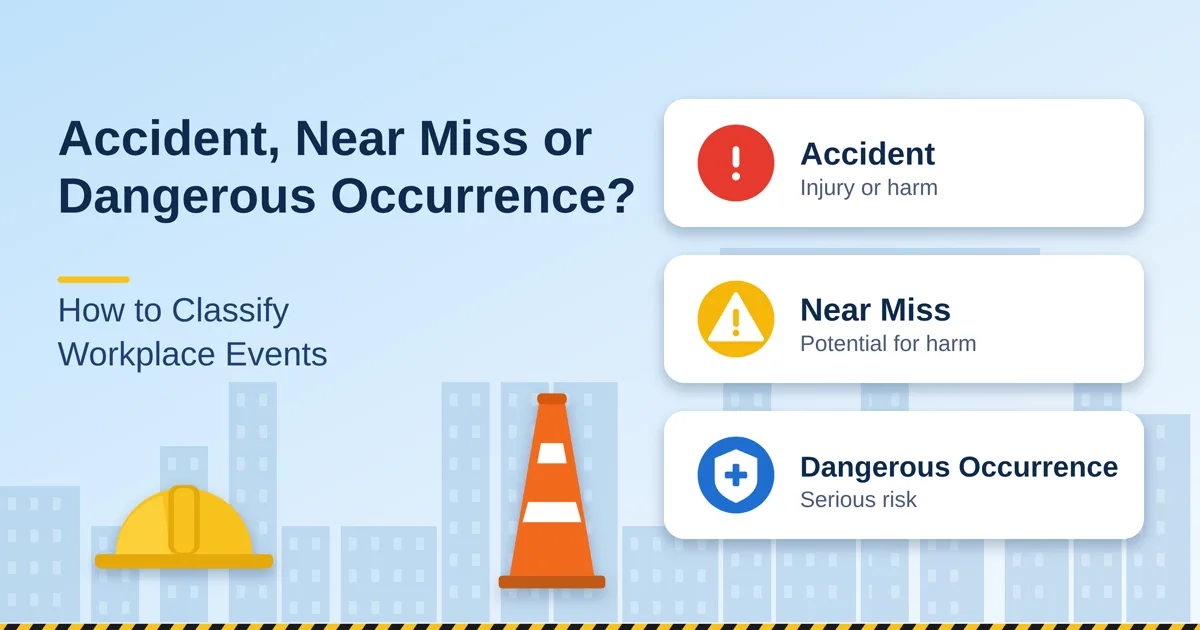
Accident, Near Miss or Dangerous Occurrence? How to Classify Workplace Events
Learn how to classify workplace events and strengthen incident reporting with clear definitions for accidents, near misses and dangerous occurrences.