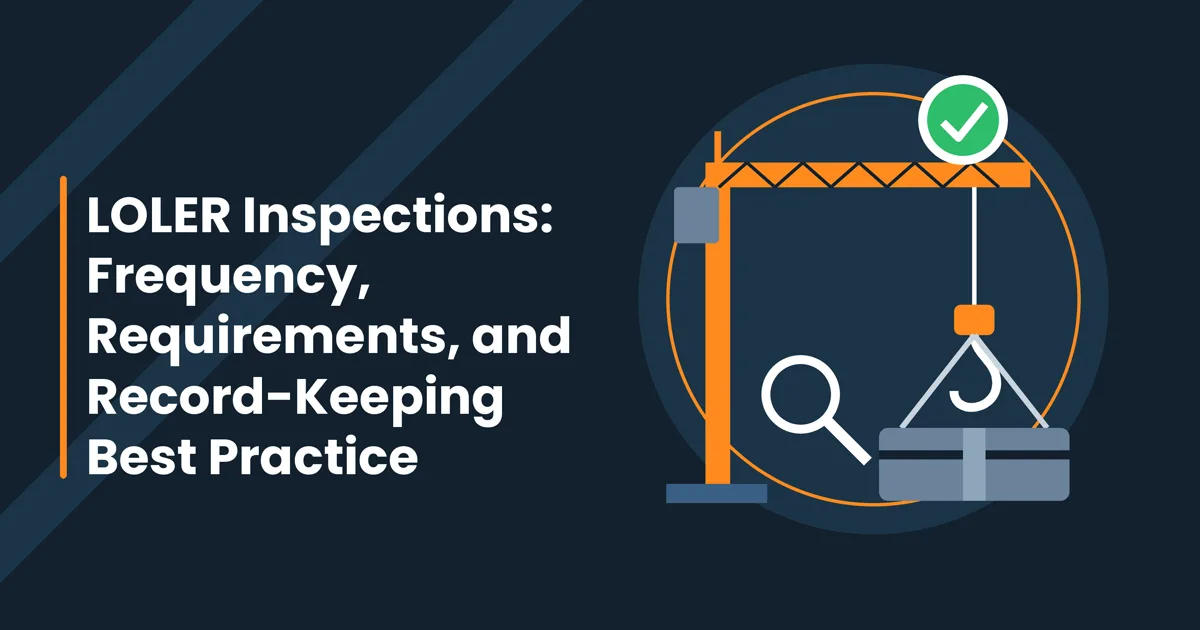
LOLER Inspections: Frequency, Requirements, and Record-Keeping Best Practice
Key Takeaways
- Lifting equipment used to lift people, and all lifting accessories, need a thorough examination at least every 6 months; other lifting equipment at least every 12 months, unless a competent person’s examination scheme says otherwise.
- The thorough examination must be carried out by a competent person who will prepare a written report.
- Document observations, immediately address hazardous conditions, and maintain records and reports safely.
Introduction
Lifting equipment is essential to many workplaces, but if it isn’t examined regularly, hidden defects can put people at risk. Businesses can rely on the help from LOLER inspections to ensure the lifting equipment is safe, suitable, and meets the requirements of the UK regulations. To ensure that the workplace remains safe, it's important to know how often inspections must take place, what legal requirements exist, and how to keep good records.
The right tools and processes make this simpler, from scheduling examinations to tracking defects. Tools such as safety inspection software, are designed to help teams plan and manage inspections, collect data and keep compliance documentation up to date.
What does LOLER require?
LOLER applies to lifting equipment used at work, including equipment an organisation hires or controls. Equipment must be suitable for its purpose, properly marked and maintained in a safe condition.
A thorough examination is a systematic assessment of equipment and its safety-critical parts by a competent person. It is not routine servicing or a pre-use check.
How often should LOLER inspections take place?
Unless a competent person’s examination scheme specifies other intervals, the usual schedule is:
Equipment | Examination interval |
Equipment used to lift people | Every 6 months |
Lifting accessories, such as chains, slings and shackles | Every 6 months |
Other lifting equipment, including many goods-only machines | Every 12 months |
An examination scheme may set different intervals and should identify the parts, methods and frequency.
An additional examination may be needed after circumstances that could affect safety, including damage, failure, significant modification, replacement of safety-critical parts, prolonged disuse or a change in operating conditions. Equipment whose safety depends on installation must be examined after installation and before first use, and after assembly at a new location.
Who can carry out a thorough examination?
The examiner must be a competent person with practical and theoretical knowledge and experience of the equipment. They must be able to identify defects and judge their significance, while remaining sufficiently independent and impartial.
The person who routinely services or maintains equipment should not normally examine their own work.
What should a LOLER report contain?
LOLER Schedule 1 specifies the information required in a thorough examination report. It must identify the equipment, examination date, date the next examination is due, and any defect that is or could become dangerous.
If a serious defect is found, the competent person must notify the dutyholder immediately and follow up in writing. A copy must also go to the enforcing authority. The dutyholder must ensure dangerous equipment is not used until the defect is remedied. Other defects must be addressed within the timeframe stated in the report.
Record-keeping best practice
Good records show that examinations were carried out and that defects were dealt with. Keep reports, examination schemes, inspection records and relevant Declaration of Conformity within a central, accessible system. Link each record to an asset ID, location, examination date, result and next due date.
Set advance reminders and give each examination a named owner. Keep evidence of repairs and follow-up checks alongside the report. Electronic records are acceptable, provided they can be produced on request and are secured against unauthorised alteration.
Record the pre-use checks and risk-based inspections carried out between thorough examinations. Use manufacturer's instructions and risk assessment to set frequency. Safety inspection software can schedule inspections and store the evidence, while corrective action tracking records defects, owners and deadlines and flags overdue tasks. Together they support safety compliance management.
Conclusion
The best way to achieve LOLER compliance is through a combination of timely inspections, knowledgeable staff members, rapid defect resolution, and reliable recordkeeping. You should review your current register, determine when inspections are due, and then assign ownership for every finding with a clearly defined resolution.
There are many types of safety inspection software, corrective action tracking software, and safety compliance management workflows available to assist you in managing your oversight. Consider using SiteChief's digital safety tools to create a single workflow that will allow you to manage all of your inspection data, action items, and evidence.
Further reading: How to set up a LOLER inspection programme.
Frequently asked questions
Is a LOLER examination the same as a service?
No. Maintenance is required for an item of equipment to remain operational. On the other hand, a comprehensive examination of equipment is a separate safety evaluation performed by a qualified professional.
Can I use equipment if its LOLER report is overdue?
Do not operate equipment with a past-due inspection date. Schedule an inspection and ensure the safety of the equipment prior to putting it back into operation.
Do LOLER records have to be paper copies?
No, electronic records may be accepted as long as they are able to be produced upon request and have protection against being altered without authorisation.
How often should LOLER inspections be carried out?
Under the Lifting Operations and Lifting Equipment Regulations 1998 (LOLER), lifting equipment used to lift people must generally be thoroughly examined every six months, while other lifting equipment must be examined every 12 months, unless a competent person specifies a different examination scheme.
Who is qualified to carry out a LOLER inspection?
LOLER thorough examinations must be conducted by a competent person with sufficient practical and theoretical knowledge, experience and independence to identify defects and assess equipment safety. They must also prepare a report detailing the examination findings and any required remedial actions.
Related Articles
CDM Regulations 2015 Explained: Duties, Roles, and How Software Helps
Understand CDM compliance under the 2015 regulations: client, designer and contractor duties, plus how CDM software helps you stay on track.
Fire Risk Assessments: How Often Are They Legally Required, and What Should They Cover?
Learn how often a fire risk assessment is legally required, what it must cover, and how fire risk assessment software supports fire compliance.
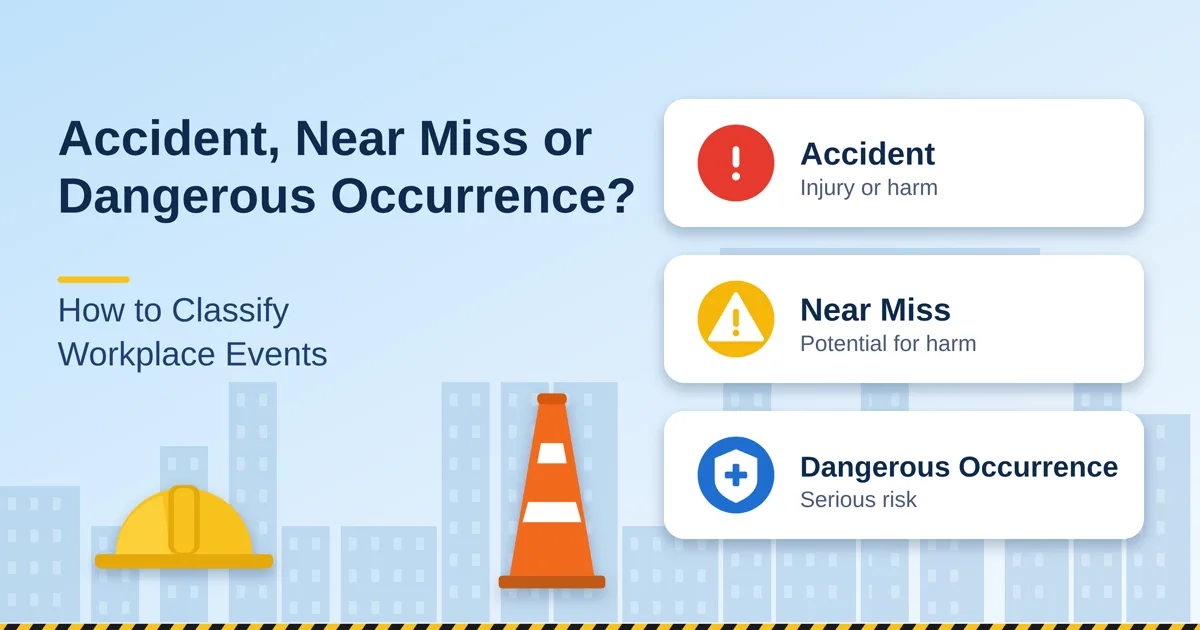
Accident, Near Miss or Dangerous Occurrence? How to Classify Workplace Events
Learn how to classify workplace events and strengthen incident reporting with clear definitions for accidents, near misses and dangerous occurrences.