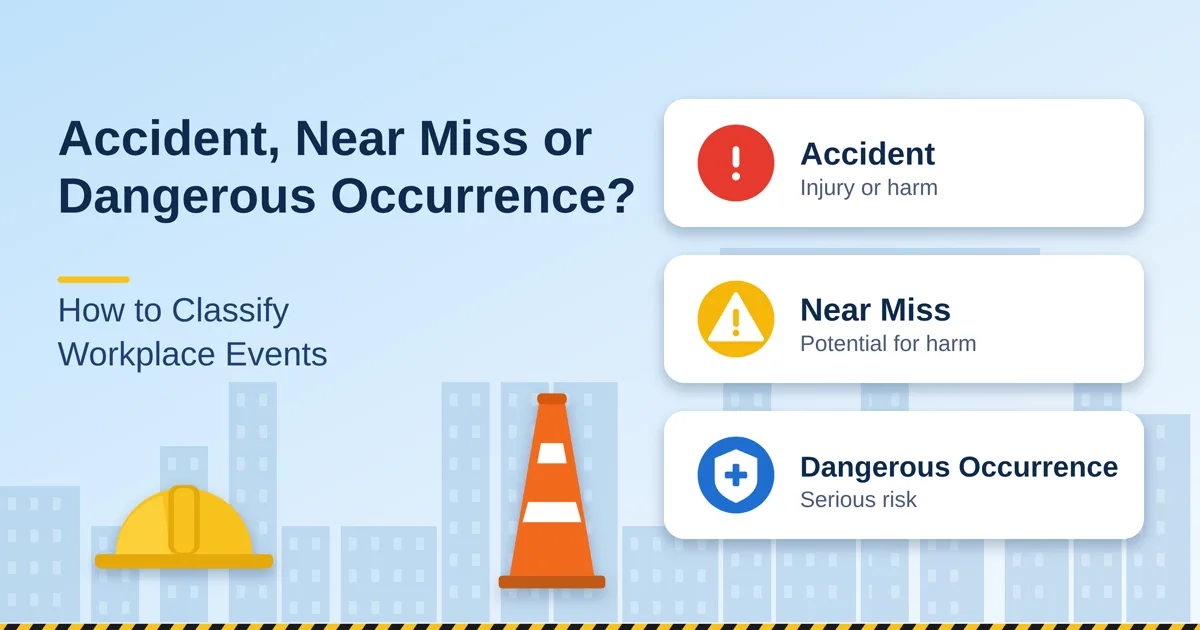
Accident, Near Miss or Dangerous Occurrence? How to Classify Workplace Events
Ensuring the safety of employees within the workplace depends on us recognising what has happened and how near disaster has occurred. Accidents, near misses and dangerous occurrences are all different events and must be categorised correctly by organisations so that adequate investigation of possible causes of occurrence can take place and measures put in place to prevent future occurrences and also comply with reporting legislation.
What is the difference between an accident, a near miss and a dangerous occurrence?
An accident is an unplanned event which has resulted in injury, ill health or damage. Even minor accidents must be reported and recorded by an organisation in accordance with their procedures.
A near miss is an incident that could have caused injury or damage but didn’t. For example, a tool falls off some scaffolding but is picked up before it can hit anyone. It highlights a weakness in equipment security or site control.
A dangerous occurrence is a specific type of event defined under RIDDOR in the UK. Certain incidents, including particular lifting equipment failures or structural collapses, may be reportable even when nobody is hurt. Not every near miss qualifies as a dangerous occurrence, so the relevant legal criteria must be checked.
How can businesses classify and manage incidents correctly?
Start by recording what happened, where it occurred, who was involved, and what the potential consequences were. Avoid assumptions until the facts have been checked. If the event meets RIDDOR reporting criteria, the responsible person must follow the applicable requirements and deadlines.
A near miss reporting system makes it easier for workers to raise concerns before hazards cause injuries. Meanwhile, an incident management system helps teams record events, investigate underlying causes, assign corrective actions, and monitor completion.
Consistent classification also reveals recurring problems, such as unsafe access equipment or inadequate training. Reviewing these patterns allows managers to address risks proactively rather than waiting for another accident.
SiteChief helps organisations streamline incident reporting, investigations, and workplace safety management. Explore the platform at sitechief.com.
Related Articles
RIDDOR Explained: What You Must Report, to Whom, and by When
Learn what workplace incidents must be reported under RIDDOR, who reports them and when, with guidance on incident reporting and compliance.

What Is a RIDDOR Reportable Incident? A Plain-English Guide
Learn which workplace incidents are reportable under RIDDOR, who must report them and how RIDDOR compliance software supports reporting.

What Is a Safety Audit? A Practical Guide for UK Businesses
Learn how health and safety audit software supports safety audits, identifies risks and helps UK businesses improve compliance.