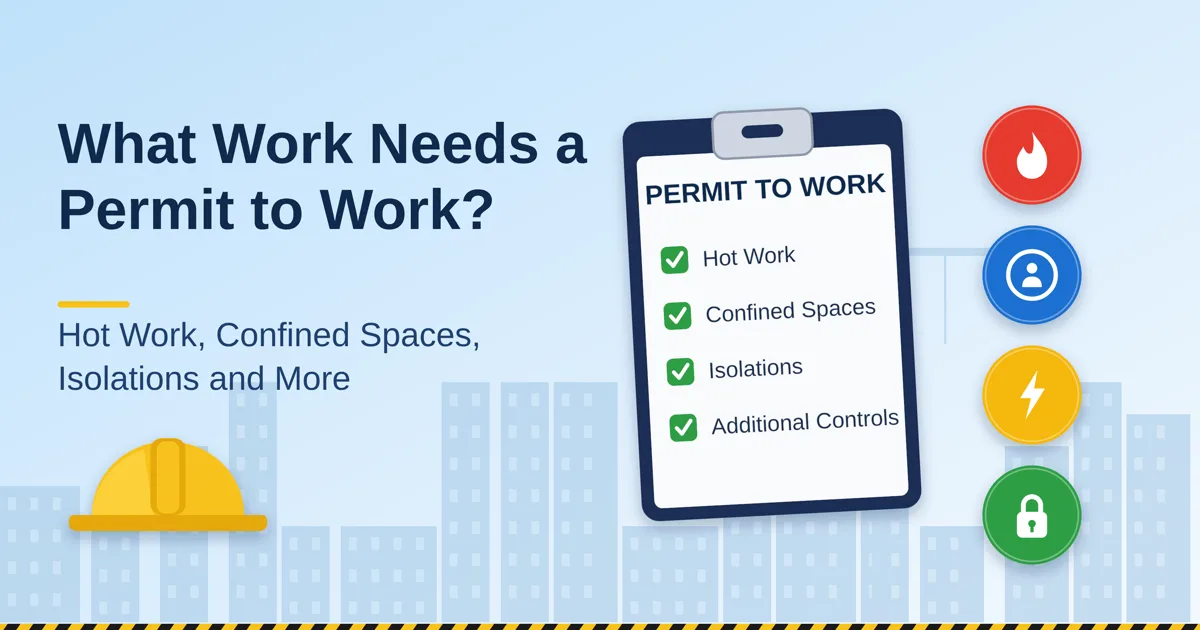
What Work Needs a Permit to Work? Hot Work, Confined Spaces, Isolations and More
A permit to work (PTW) is a formal safety procedure that has to be completed prior to commencement of a hazardous activity on a construction site. The purpose of a permit to work is to outline the potential risks for a task and the measures that have to be put in place to minimise those risks and ensure that all parties are aware of their responsibilities in completing the work.
Which activities typically require a permit to work?
Hot work such as welding, cutting and grinding can produce sparks that may ignite flammable materials. The hot work permit confirms that any combustible materials have been removed, that adequate fire extinguishers are available and that an appropriate fire-watch has been put in place.
Confined space entry may expose workers to toxic gases, oxygen deficiency or restricted escape routes. Permits should address atmospheric testing, ventilation, communication and emergency rescue arrangements.
Electrical and mechanical isolations help prevent unexpected energisation or the release of stored energy during maintenance. Lockout/tagout procedures and isolation verification are essential before work starts.
Other activities that may require permits include excavation near buried services, work involving hazardous substances and certain high-risk lifting operations. Appropriate construction COSHH assessments help teams understand chemical hazards, exposure risks and necessary control measures.
How can contractors manage permits more effectively?
A permit should identify the task, location, authorised personnel, hazards, precautions, validity period and approval requirements. Supervisors must check that controls are effective before work starts and suspend permits if conditions change.
Good coordination matters when several contractors share a site. For example, scaffolding inspection software can help maintain inspection records and highlight defects that could affect safe access to work areas.
Digital permit management can make approvals, status checks and audit trails easier to manage, particularly across multiple sites. However, technology cannot replace competent supervision, suitable training or proper risk assessments.
For a more organised approach to permits, inspections and compliance, explore SiteChief at sitechief.com
Related Articles
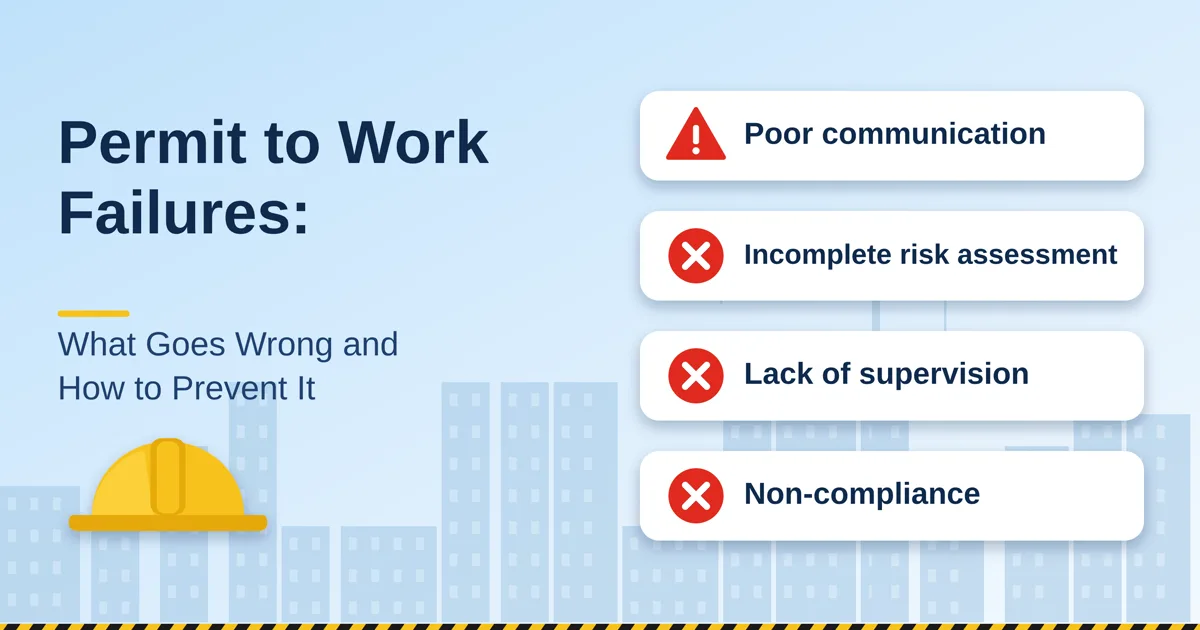
Permit to Work Failures: What Goes Wrong and How to Prevent It
Explore common permit to work failures, from poor communication to missing risk checks, and learn how stronger controls support safer work.

Manufacturing Safety Software: How Can It Reduce Factory-Floor Incidents
Discover how manufacturing safety software helps reduce factory-floor incidents, manage hazards and improve workplace safety.

Construction Safety Management: Digital Site Safety System
Learn how construction firms are building digital site safety systems to strengthen safety management, reduce incidents and stay compliant on-site.