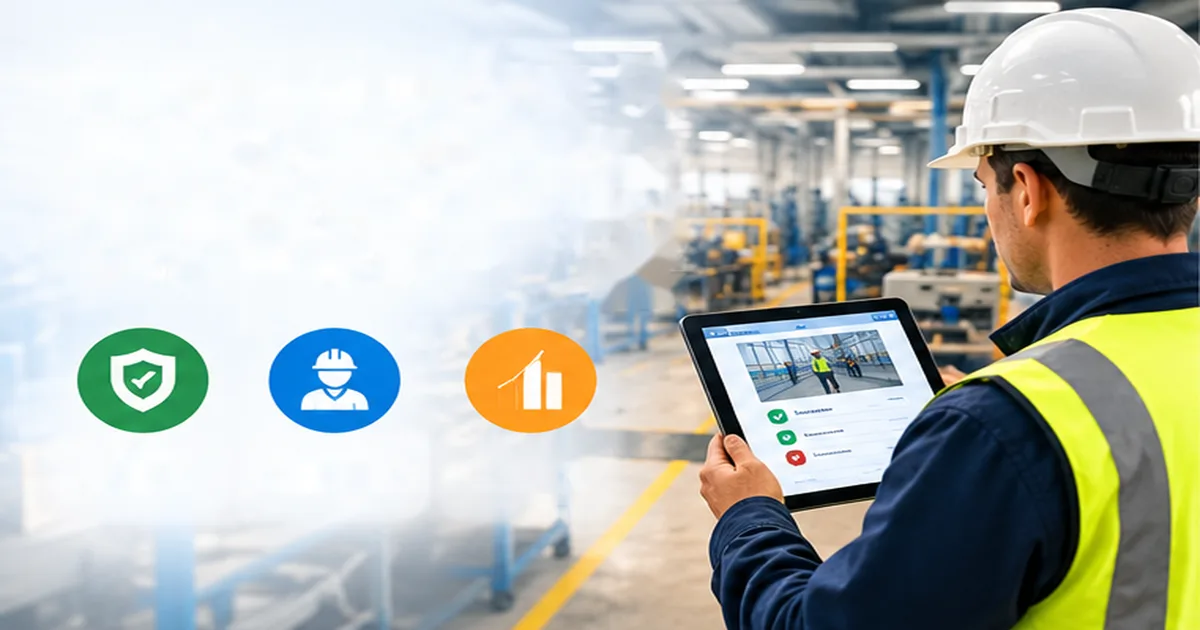
Manufacturing Safety Software: How Can It Reduce Factory-Floor Incidents
Key Takeaways
- Digital safety inspections reveal potential damage or unsafe conditions of equipment prior to an accident.
- All risk assessments, employee training, and any incidents can be recorded centrally.
- Evaluating near-misses and the implemented measures for removal of hazards helps to avoid repetitive occurrences of hazards and their consequent incidents.
Introduction
Workplaces are put at risk by machine guards that are not checked and by maintenance work that is started without proper isolation. With production underway, manufacturing safety software enables production staff to identify and manage risks during scheduled safety inspections by means of procedures that are carried out in good time. Manufacturing health and safety software in particular brings safety records under one roof.
What Is Manufacturing Safety Software?
Manufacturing safety software is a digital system that helps factories manage workplace hazards, inspections, incidents, training, and compliance records. It replaces scattered paperwork and disconnected spreadsheets with structured processes that make safety information easier to access and act on.
For example, a supervisor checking a production line can record a faulty guard, assign a corrective action, and track its completion. The maintenance team can then address the problem before the equipment returns to normal operation.
The software supports safety management, but it cannot replace competent supervision, worker training, or physical safety controls.
How Can Digital Inspections Prevent Factory Accidents?
Digital inspections assist teams in identifying risks associated with tools and working environments before they lead to any harm. Scheduled inspections and reported findings help identify the issues that would be missed during busy shifts.
Noteworthy inspection features include:
- Equipment inspections; keeping records of the state of machines, lifting equipment, and protective devices.
- Automated reminders; warning responsible personnel when inspections/reviews are due.
- Corrective measures; designating offenders to certain persons.
- Electronic record-keeping of inspection outcomes.
Let’s take a typical example of a damaged conveyor belt guard. An inspection with documented evidence could report the damage, initiate appropriate maintenance actions, and keep a record of actions taken. The equipment may go back to operation only when authorized personnel verify its safety.
Which Factory Hazards Can Safety Software Help Manage?
The creation of health and safety software for manufacturers helps teams in the areas of mechanical, chemical, electrical, and operational risk management through consistent practice and documented assessments.
The particular instruments required will rely on the factory’s activities and risk profile.
- Hazards in machinery: Keep a record of measurements of guarding, equipment inspection, and maintenance hazards.
- Hazardous substances: Keep a record of the chemical registers as well as the exposure assessments and other necessary control measures related to the activities.
- Maintenance works: Ensure that permits and lockout/tagout activities are done,e as they help to avoid the energisation of the equipment.
- Noise levels: Keep a record of assessments carried out and find places where hearing protection is necessary.
- Worker’s competence: Keep a record of the worker’s training and qualifications as well as the dates of renewal of the safety-critical activities.
With the help of this software, it is easier to conduct all the above-mentioned procedures.
How Does Incident Reporting Help Reduce Repeat Accidents?
Incident reporting helps manufacturers understand why an event occurred and what needs to change to prevent recurrence. Near-misses deserve attention too, because they can reveal weaknesses before someone is injured.
A useful reporting process captures the event, location, equipment involved, contributing conditions, and immediate response. Investigators can then examine the underlying causes rather than stopping at the first visible mistake.
For instance, repeated slips near a production area may point to a leaking pipe, poor drainage, or an ineffective cleaning routine. Recording each event and tracking corrective actions helps the team address the source of the problem.
Reviewing these records regularly also helps safety managers identify patterns and prioritise improvements.
What Should Manufacturers Look for in Safety Software?
Choose software that fits actual factory workflows rather than adding unnecessary administrative work. Operators and supervisors should be able to record findings, access procedures, and complete assigned tasks without struggling with complicated forms.
Look for these capabilities:
- Mobile-friendly inspections and hazard reporting.
- Risk assessments and document management.
- Incident investigation and corrective-action tracking.
- Training and competency records.
- Permit-to-work workflows for higher-risk activities.
- Dashboards showing overdue actions and inspection status.
Check whether the system supports your sites, reporting needs, and applicable regulations. For UK manufacturers, relevant requirements may include PUWER, COSHH, LOLER, and DSEAR, depending on the equipment and activities involved.
How Can Factories Measure Safety Improvements?
Factories can determine their progress through monitoring preventive measures as well as incidents. The performance indicators include overdue inspections, close calls, corrective actions, training level, and accident types.
When taken as a whole, those indicators can draw a clearer picture for managers regarding the effectiveness of safety measures. For example, if there is an increase in reports about close calls, it might mean that reporting is better than before and the situation seems to worsen actually worsening.
A crucial measure of success is to analyse the situation, confirm the results, and adjust safety policies based on them.
Build a Safer Factory Floor With the Right Tools
Preventing incidents starts with consistent checks, clear responsibilities, and action on reported hazards. When these processes are easy to follow, safety becomes a practical part of daily production rather than a task handled only during audits.
SiteChief offers manufacturing-focused tools for equipment inspections, risk assessments, hazardous-substance management, permits, and incident reporting. Explore its manufacturing safety management platform to see how manufacturing safety software and manufacturing health and safety software can support your factory's safety processes.
FAQs
1. Can small manufacturing businesses use safety software?
Yes. As a small manufacturing company, you can use digital safety software to organise, e.g., inspections, risk analyses, training records, and reports of incidents. The software has to match the operational hazards and the possibilities of the company.
2. Does safety software guarantee fewer workplace accidents?
No. The key to a good safety software solution is to support hazard identification, near miss reporting and corrective action. The rest depends on adequate safety controls, sufficient worker involvement, adequate maintenance, and good management decisions.
3. Can safety software help with regulatory compliance?
Yes. Software can assist with recording relevant information to demonstrate compliance with legal requirements; however, use of software alone is not sufficient to guarantee full compliance with all legal requirements.
4. Why should factories record near-misses?
The reports of near misses can reveal hidden hazards that could cause damage under different circumstances. The investigation of near misses can help to find weaknesses in the systems of a factory, which can be corrected before an accident actually happens.
Related Articles
Construction Safety Management: Digital Site Safety System
Learn how construction firms are building digital site safety systems to strengthen safety management, reduce incidents and stay compliant on-site.
UK Workplace Safety Changes in 2026: Key Requirements
A practical summary of the main UK workplace safety changes employers should prepare for in 2026.
Why Near-Miss Reporting Matters (and How to Get Employees to Actually Do It)
Find out why near-miss reporting is important, how to encourage employees to report, and how technology can make the process much easier.