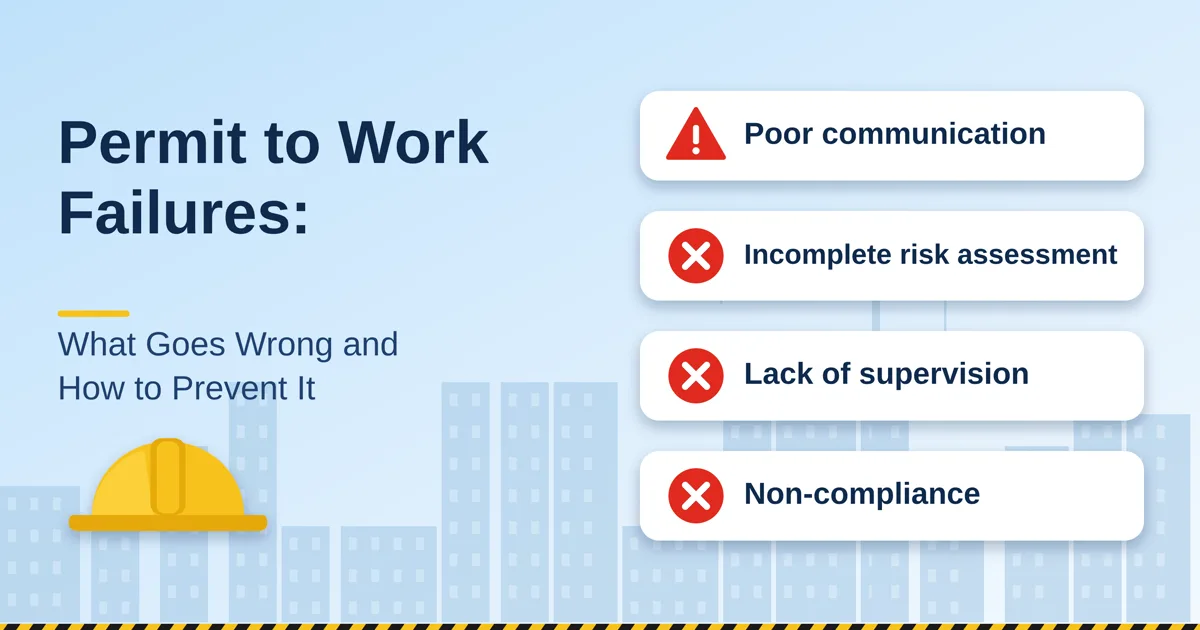
Permit to Work Failures: What Goes Wrong and How to Prevent It
The permit to work process aims to control work that is of high risk, but completing a form is not enough to ensure that work is done safely. Most failures occur because essential steps are done too fast, there is confusion about roles and responsibilities, or the site situation changes without the necessary update to the permit.
Why do permit to work failures happen?
The most common reason for permit-to-work failures is that a complete risk assessment has not been conducted. This includes factors such as stored energy, flammable materials and other nearby activities. Workers may also incorrectly believe that they do not have to adhere to permit restrictions where they have not been adequately explained by the relevant supervisor.
Another issue is poor coordination between teams. Electrical maintenance, hot work and other simultaneous activities can create unexpected risks when permits are managed separately. Missing signatures, expired authorisations and unverified isolations may allow work to continue without the necessary safeguards.
Weak incident follow-up can make matters worse. Without proper accident management, organisations may record an event but fail to investigate its underlying causes or address the conditions that contributed to it.
How can organisations prevent repeat failures?
Initially, check that permits are related to the task at hand, approved by authorised personnel and verified prior to work commencing. Supervisors should check that isolation, protection, emergency measures and other controls are in use. If the situation changes, work must cease until an assessment of the conditions has taken place and the permit is amended or reissued.
Regular audits and toolbox talks can help identify recurring problems. Contractors should also review near misses, worker feedback, and previous incidents to improve procedures rather than treating every failure as an isolated mistake.
Using corrective action tracking software can help assign actions to named individuals, set deadlines and monitor progress through verified completion. Digital permit records can further improve visibility by showing approval status, expiry times and outstanding close-outs.
Ultimately, effective permit management requires clear accountability, practical training and consistent supervision. Technology supports these efforts, but it cannot replace sound safety decisions.
SiteChief helps organisations connect permit management, incident investigations and corrective actions within one digital safety platform.
Related Articles
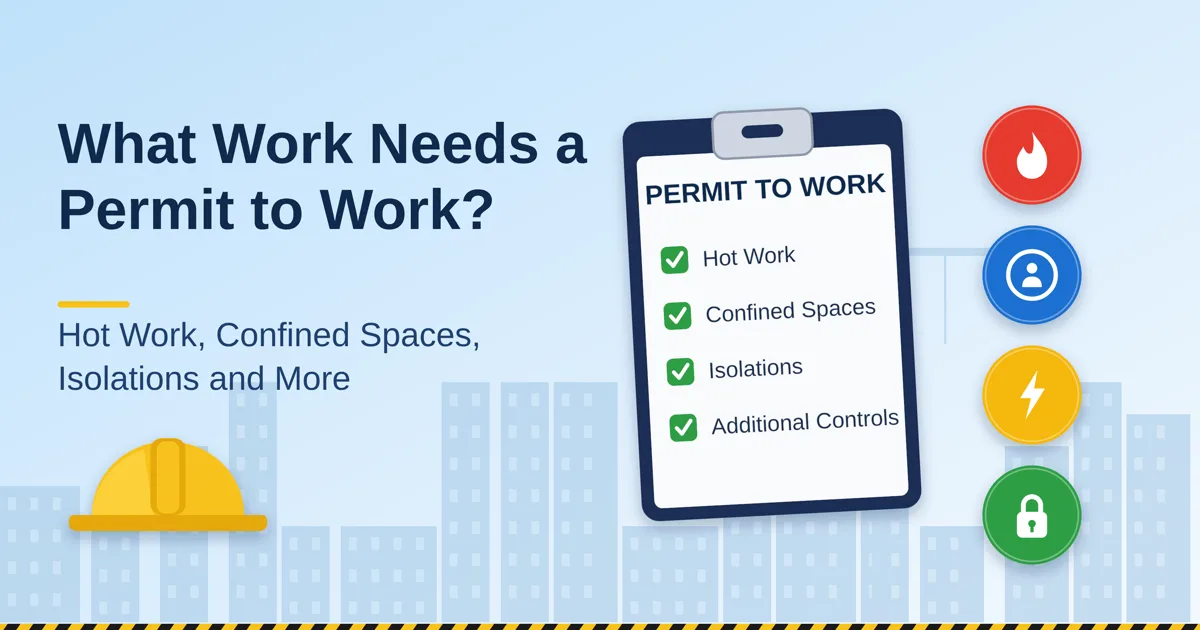
What Work Needs a Permit to Work? Hot Work, Confined Spaces, Isolations and More
Learn when a permit to work system is needed for hot work, confined spaces, isolations and other high-risk tasks.

Manufacturing Safety Software: How Can It Reduce Factory-Floor Incidents
Discover how manufacturing safety software helps reduce factory-floor incidents, manage hazards and improve workplace safety.

Construction Safety Management: Digital Site Safety System
Learn how construction firms are building digital site safety systems to strengthen safety management, reduce incidents and stay compliant on-site.