
Health and Safety Audits vs Inspections: What's the Difference and How Often Should You Do Them?
Key Takeaways
- Inspections identify immediate hazards and unsafe conditions in workplaces, equipment, and work activities.
- Audits examine whether health and safety arrangements of a company are sufficient, have been properly implemented, and are functioning as intended.
- They should be held as frequently as necessary to identify changing risks in the workplace, meet statutory requirements, respond to changes in the way a business operates and address findings from previous audits and inspections.
Introduction
Businesses identify risks through health and safety checks but understand that audits and inspections have very different objectives. This article will examine the purpose of inspections and audits and when each should be used to help keep employees and others safe. Safety inspection software and ISO 45001 software can also be used to support health and safety work.
What Is the Difference Between a Safety Audit and an Inspection?
A safety inspection is a practical check of workplace conditions, equipment, or activities. It helps identify visible hazards, damaged equipment, blocked fire exits, poor housekeeping or missing protective equipment.
A safety audit takes a broader view. It examines whether health and safety policies, risk assessments, procedures, training and monitoring arrangements are appropriate and followed in practice.
For example, an inspection might identify a damaged machine guard. An audit might examine whether maintenance procedures, staff training and reporting arrangements are effective enough to prevent similar problems.
Both approaches are valuable: inspections help identify immediate issues, while audits can reveal weaknesses in the systems designed to control risks.
How Often Should Safety Inspections Take Place?
Inspection frequency should reflect the level of risk, the type of work, equipment requirements and any relevant legal or manufacturer instructions.
A practical approach is to:
- High-risk areas should be inspected frequently, for example, before they are used, during the shift.
- Schedule routine workplace checks to inspect housekeeping, access routes, fire precautions, and equipment, based upon risk and the site’s procedures.
- Inspect after significant changes: Check the conditions after changes to equipment, processes, materials, etc., and record any necessary actions.
- Reported problems identified during workplace inspections should be rechecked to confirm that they have been fixed and that appropriate controls are in place to prevent reoccurrence of the problem.
There is no single inspection frequency that applies to every workplace. Businesses should document their reasoning and adjust schedules when risks, incidents or inspection findings indicate a need.
How Often Should a Health and Safety Audit Be Conducted?
Audits should follow a planned programme based on the organisation’s risks, size, complexity and health and safety arrangements. Higher-risk activities or recurring problems may justify more frequent audits, while other areas may be reviewed less often.
Businesses should also consider an audit when there are significant operational changes, repeated incidents, concerns about compliance or evidence that existing controls are not working.
Organisations using ISO 45001 should establish an internal audit programme that considers the importance of relevant processes, changes affecting the organisation and previous audit results. The standard does not set one universal interval for every audit.
A documented schedule supported by ISO 45001 software can help teams organise audits, record findings and monitor corrective actions. However, software does not replace competent auditors or the need to act on identified risks.
How Can Businesses Manage Inspections and Audits Effectively?
Your risk assessment checklist should form the basis of your safety inspection to clearly identify the tasks to be completed, locations to be inspected and any specific hazards to be assessed. You should clearly record your findings, assign actions to specific individuals and set realistic completion dates. For serious risks action should be taken immediately and not left until the next scheduled review.
There are a variety of safety inspection software packages available which can assist in completing digital safety checklists and storing images along with safety inspection records and allocating actions with completion dates. Additionally, software that supports the implementation of ISO 45001 can aid in organising audits and tracking findings and actions.
Review completed safety checks for recurring problems. Do not continue to list the same safety defect if it is not being fixed. Close out all actions and verify that fixes are working effectively over time.
Conclusion
A consistent approach to inspections and audits helps businesses identify hazards, review their safety arrangements, and follow improvements through to completion. SiteChief provides digital tools for managing inspections, audits, records and corrective actions in one place. Explore SiteChief to see how digital workflows can support your safety management process.
FAQs
1. Can a safety inspection replace a health and safety audit?
No. An inspection checks specific conditions or activities, whereas an audit assesses wider management arrangements. Most organisations benefit from using both where appropriate to their risks.
2. Are health and safety audits legally required in the UK?
Legal duties depend on the applicable legislation and circumstances. Employers must manage workplace risks, but there is no universal legal requirement for every business to conduct all audits at one fixed interval.
3. Who should carry out audits and inspections?
People conducting them should have suitable knowledge, training and experience for the risks involved. More complex or specialist assessments may require additional expertise or independent review.
4. What should happen after a problem is identified?
Record the finding, assess the risk, take appropriate action, and assign responsibility for follow-up. Verify that the issue has been resolved and review whether further controls are necessary.
Related Articles
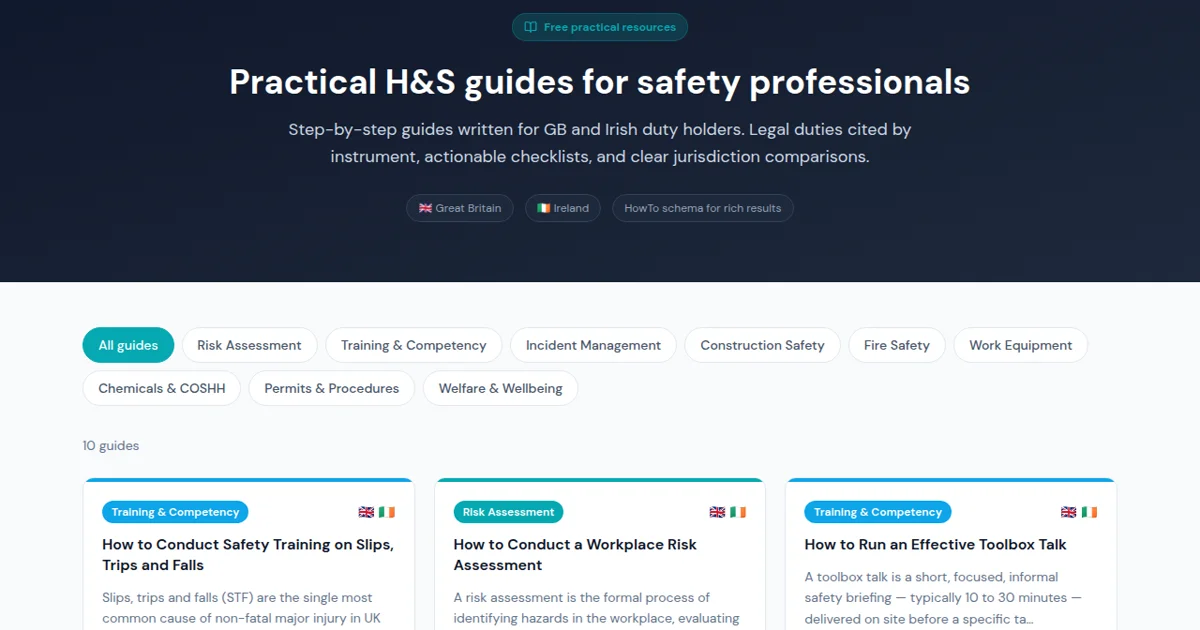
How H&S Guides Help Safety Managers and Teams Meet Their Compliance Duties
SiteChief's free H&S Guides give safety managers step-by-step frameworks for risk assessment, incident management, fire, COSHH and construction safety.

From Root Cause to Resolution: Building a CAPA Process for Health & Safety
Learn how to build an effective CAPA process for health and safety, turning root cause findings into lasting resolutions with the right software.

Health and Safety Software for Schools: A Guide for Business Managers and SBMs
A practical guide for business managers and SBMs on selecting health and safety software for schools, covering compliance and safeguarding needs.