
Top 10 Construction Site Safety Tips for 2025
Construction remains one of the most hazardous industries in Great Britain, accounting for a disproportionate share of workplace fatalities and serious injuries. Over the five years to 2025/26, construction accounted for 186 of 651 worker deaths in Great Britain — 29%, and the largest share of any main industry sector. There were 25 construction deaths in 2025/26 (HSE, provisional).
An estimated 79,000 construction workers also suffered from work-related ill health, around 3.8% of the sector’s workers, a rate HSE describes as not statistically different from the 4.2% average across all industries. However, most construction incidents are preventable. By implementing proven safety practices and leveraging modern technology, site managers can dramatically reduce risk while maintaining productivity and compliance.
The HSE’s construction safety guidance provides the regulatory framework that underpins every site’s safety obligations — from CDM 2015 duties to fall protection and plant management.
1. Conduct Comprehensive Site Inductions
Every person entering your site—whether employee, contractor, or visitor—must receive a thorough safety induction. This should cover site-specific hazards, emergency procedures, welfare facilities, and reporting requirements. Digital induction systems can track completion, test comprehension, and provide instant proof of training for compliance purposes.
2. Enforce Strict PPE Requirements
Personal Protective Equipment is the last line of defense against workplace hazards. Establish clear PPE requirements for different site areas and activities, ensure all PPE is properly maintained and replaced when damaged, and consider implementing AI-powered PPE detection systems that automatically verify compliance before workers enter hazardous zones.
3. Implement Effective Edge Protection
Falls from height remain the leading cause of construction deaths, accounting for over half of all construction deaths over the five years to 2025/26 — an average of 19 deaths a year (HSE). Install guardrails, toe boards, and safety netting wherever workers are exposed to fall risks. Edge protection should be in place before work at height begins, regularly inspected, and designed to HSE standards. Remember: collective protection measures are always preferable to individual fall arrest systems.
4. Maintain Safe Access and Egress
Site layout significantly impacts safety. Ensure clear, well-maintained walkways separate from vehicle routes, adequate lighting in all work areas, appropriate signage for hazards and directions, and emergency exit routes that remain clear and accessible at all times.
5. Control Vehicle and Plant Movements
Vehicles and mobile plant create significant crush risks. Implement segregated routes for vehicles and pedestrians, use trained banksmen for reversing operations, ensure all plant operators are competent and certified, and consider proximity warning systems on large plant. Never allow pedestrians in areas where plant is operating unless absolutely necessary and properly controlled. See the HSE workplace transport guidance for more detail.
6. Conduct Regular Toolbox Talks
Short, focused safety briefings keep safety at the forefront of workers’ minds. Hold daily or weekly toolbox talks covering specific hazards, recent incidents or near misses, seasonal considerations, and upcoming high-risk activities. Keep talks brief (10-15 minutes), interactive, and relevant to the current work being undertaken. Musculoskeletal disorders are worth a talk of their own: construction has the highest rate of any major industry, at around 2,000 cases per 100,000 workers against an all-industry average of 1,180 (HSE).
7. Manage Environmental Hazards
Construction sites are exposed to the elements. Monitor weather conditions and adjust work plans accordingly, provide welfare facilities including warm, dry rest areas, ensure adequate hydration, especially in hot weather, and have protocols for suspending work in extreme weather conditions like high winds or lightning.
8. Control Hazardous Substances
Many construction materials and processes involve hazardous substances. Maintain up-to-date safety data sheets for all substances on site, provide appropriate PPE and RPE for handling hazardous materials, ensure proper storage and labelling of chemicals, and implement dust suppression measures when cutting or grinding. Across all industries, around 11,000 deaths a year are from lung disease linked to past workplace exposures (HSE).
9. Establish Clear Reporting Procedures
Encourage a culture where hazards, near misses, and incidents are reported without fear of blame. HSE estimates that employers report only around half of RIDDOR-defined non-fatal injuries to employees. Make reporting easy with mobile apps or simple forms, respond to reports promptly and communicate actions taken, recognise workers who report hazards, and analyse trends to identify systemic issues requiring intervention.
10. Leverage Safety Technology
Workplace injuries and ill health in construction cost an estimated £1.4 billion in 2023/24 (HSE). Modern construction sites can benefit from numerous technological safety solutions: AI-powered video analytics for hazard detection, wearable devices that monitor worker location and vital signs, digital permit-to-work systems that ensure proper authorization, and cloud-based platforms that centralize safety documentation and ensure nothing falls through the cracks.
Creating a Safety-First Culture
Technology and procedures are essential, but the most important factor in construction site safety is culture. When safety is genuinely valued—not just as a compliance exercise, but as a core principle—workers look out for each other, speak up about hazards, and take personal responsibility for working safely.
Site managers set the tone. Work-related ill health and injury caused an estimated 40.1 million working days lost across all industries in 2024/25 (HSE). By visibly prioritizing safety, responding constructively to incidents and concerns, and recognizing safe behaviors, you create an environment where everyone goes home safe at the end of every shift. That’s the ultimate measure of success on any construction site.
Frequently Asked Questions
What are the biggest hazards on a UK construction site?
Falls from height are the leading cause of construction deaths. Other major risks include vehicle and plant movements, hazardous substances such as dust and chemicals, poor site access and egress, and exposure to extreme weather.
What should a construction site induction cover?
Every employee, contractor and visitor should be told about site-specific hazards, emergency procedures, welfare facilities and how to report hazards or incidents before they start work. Digital inductions can track completion and test understanding.
What edge protection is required on construction sites?
Guardrails, toe boards and safety netting should be installed wherever people are exposed to a fall risk. Edge protection should be in place before work at height begins and inspected regularly. Collective protection is preferred over individual fall arrest systems.
How can site managers control vehicle and plant risks?
Segregate vehicle and pedestrian routes, use trained banksmen for reversing, make sure plant operators are competent and certified, consider proximity warning systems on large plant, and keep pedestrians out of areas where plant is operating unless properly controlled.
How often should toolbox talks be held?
Toolbox talks should be held daily or weekly. Keep them short (about 10 to 15 minutes), interactive and relevant to the current work, covering specific hazards, recent near misses, seasonal conditions and upcoming high-risk activities.
Related Articles
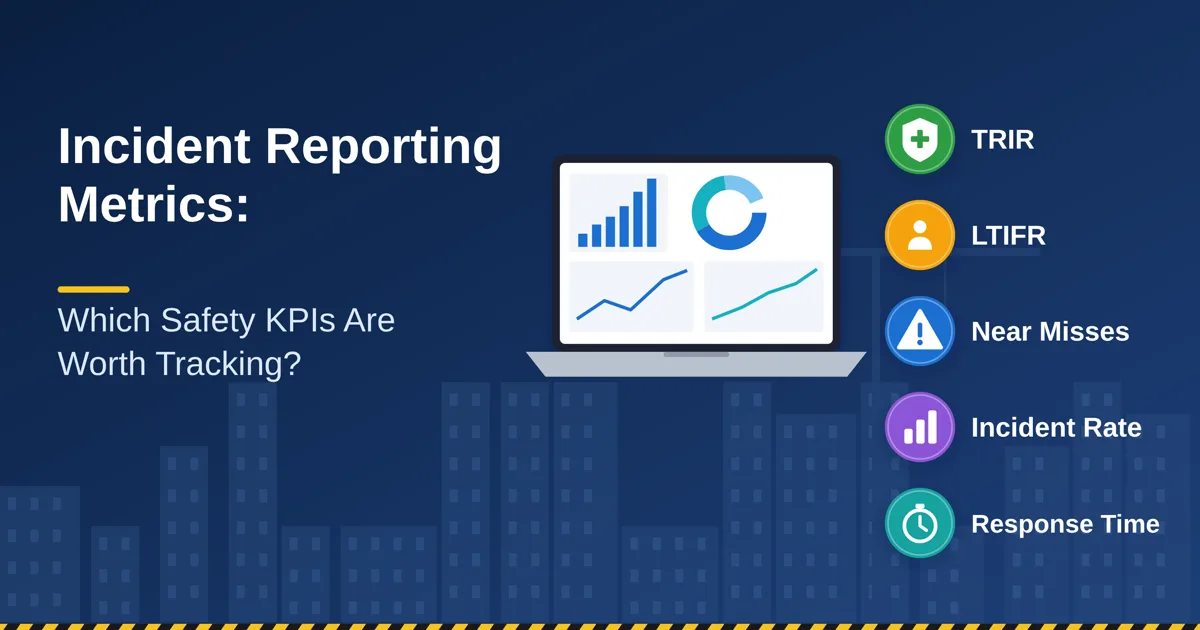
Incident Reporting Metrics: Which Safety KPIs Are Worth Tracking?
Discover which safety KPIs matter, from near misses to incident rates, and how an incident reporting system helps track trends and improve safety.
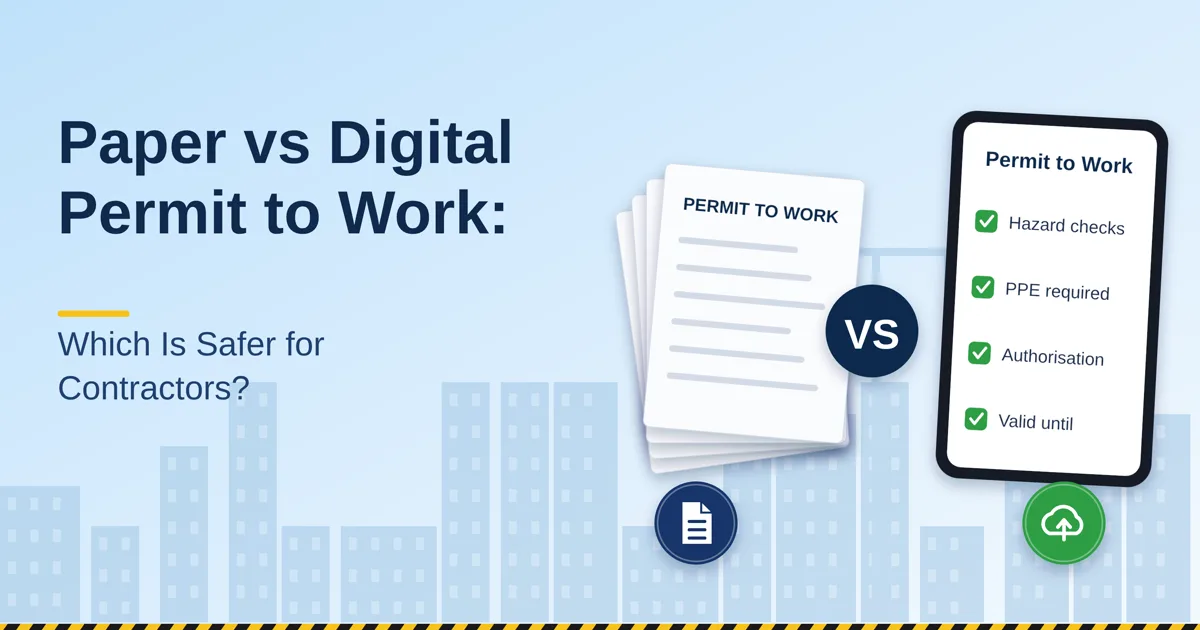
Paper vs Digital Permit to Work: Which Is Safer for Contractors?
Compare paper permits with digital permit to work software and see how digital workflows can improve contractor safety, tracking and compliance.
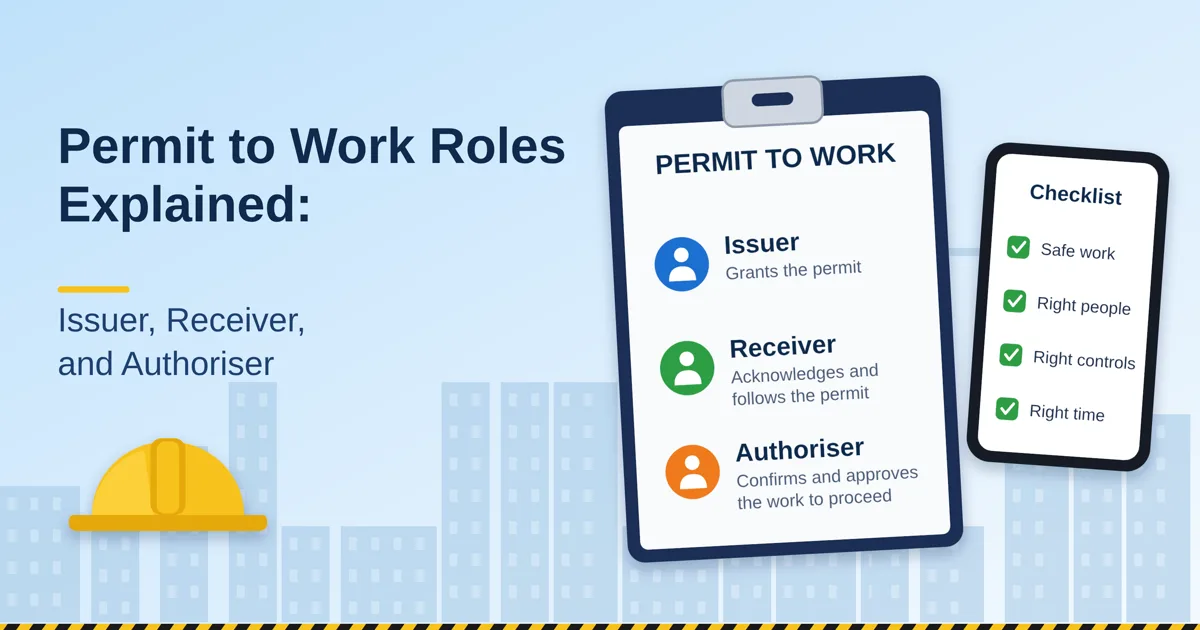
Permit to Work Roles Explained: Issuer, Receiver, and Authoriser
Understand issuer, receiver and authoriser duties in a permit to work system to improve control, communication and workplace safety.