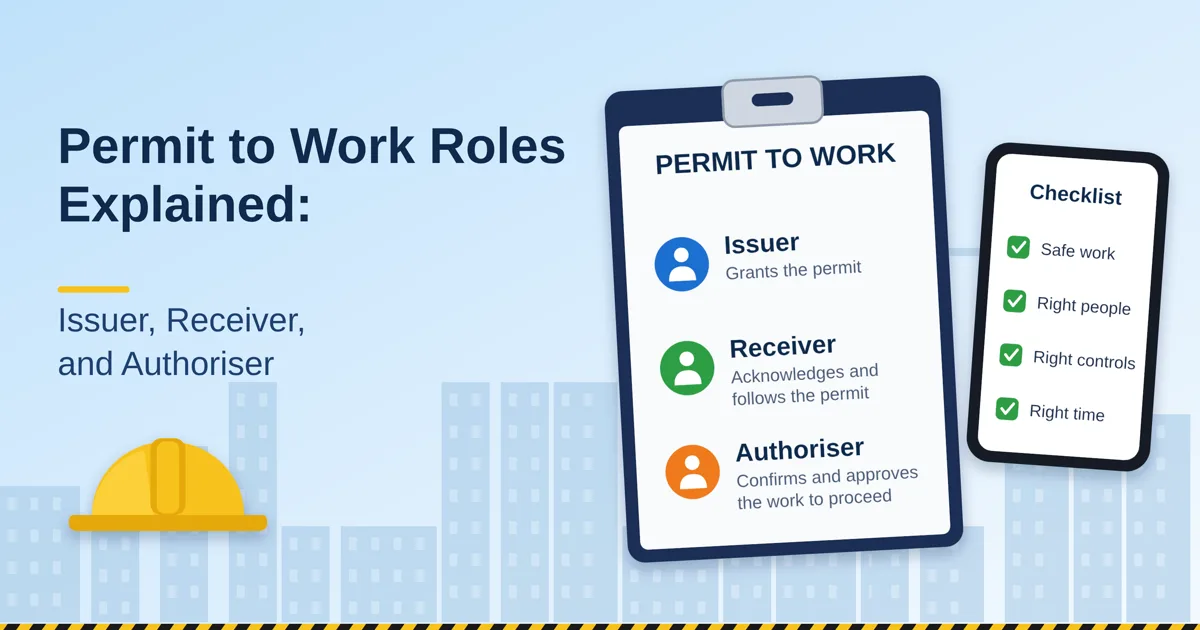
Permit to Work Roles Explained: Issuer, Receiver, and Authoriser
The Permit to Work system will only function effectively when all roles and responsibilities are clearly defined. On construction sites and in industrial environments, this must be clearly assigned to prevent work being undertaken while safety checks are incomplete, work conflicts arise, or unsafe assumptions are made.
What does each permit to work role involve?
The permit issuer is the individual who prepares the permit to work or issues a pre-prepared permit to work. The permit issuer carries out a task-specific briefing, reviews relevant risk assessments, and confirms that all necessary isolations and checks have been carried out and that the work area is ready for work to commence.
The permit receiver is usually the supervisor or competent person responsible for carrying out the authorised work. They must understand the permit conditions, brief the workforce, check that precautions are followed and stop the activity if circumstances change. Workers should never assume that receiving a permit removes their responsibility to work safely.
The authoriser provides formal approval where the process requires a separate approval stage. They review the proposed work, confirm that appropriate controls are documented and check for conflicts with other activities. Depending on the organisation, the authoriser and issuer may be different people.
How can teams maintain accountability and compliance?
Clear communication between these roles is essential. Everyone should know who approves the work, who supervises it, and who closes the permit when the task finishes. Handover arrangements are particularly important when shifts change, or multiple contractors share the same work area.
A structured permit to work system can record approvals, signatures, validity periods, suspensions, and permit close-outs. Meanwhile, training compliance software helps organisations track relevant qualifications, refresher training and competency records, reducing the risk of assigning safety-critical tasks to unprepared workers.
Digital records also make it easier to identify outstanding approvals and review completed jobs during audits. However, software should support established procedures rather than replace competent decisions or site supervision.
SiteChief helps teams organise permits, training records and wider health and safety processes through one digital platform. Explore the solution at sitechief.com.
Related Articles
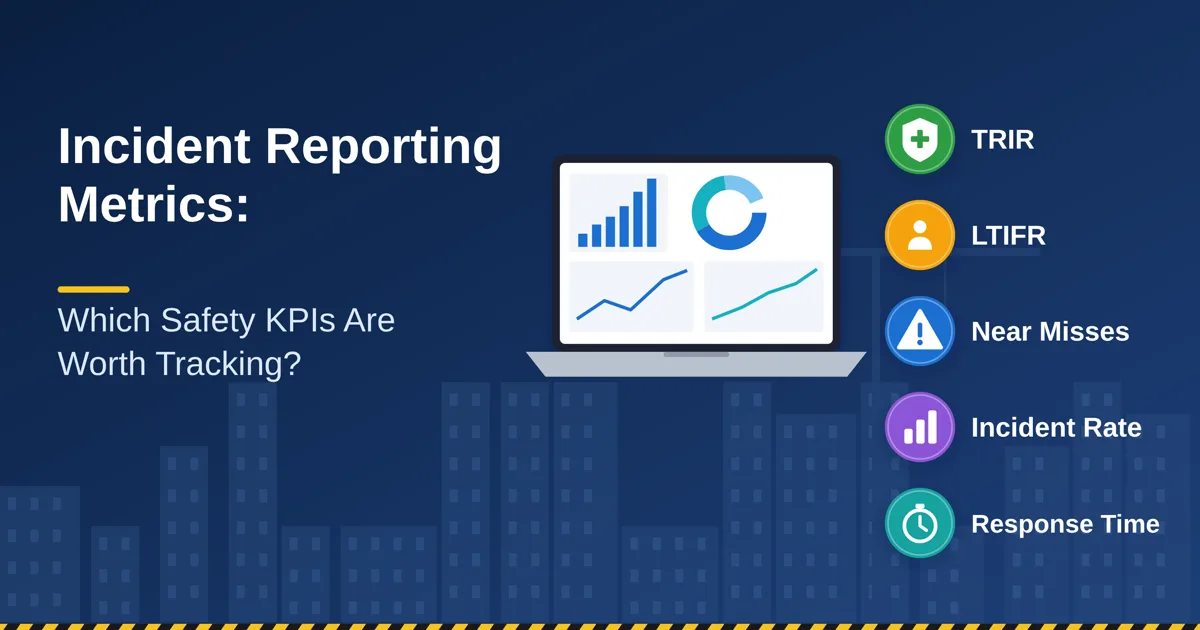
Incident Reporting Metrics: Which Safety KPIs Are Worth Tracking?
Discover which safety KPIs matter, from near misses to incident rates, and how an incident reporting system helps track trends and improve safety.
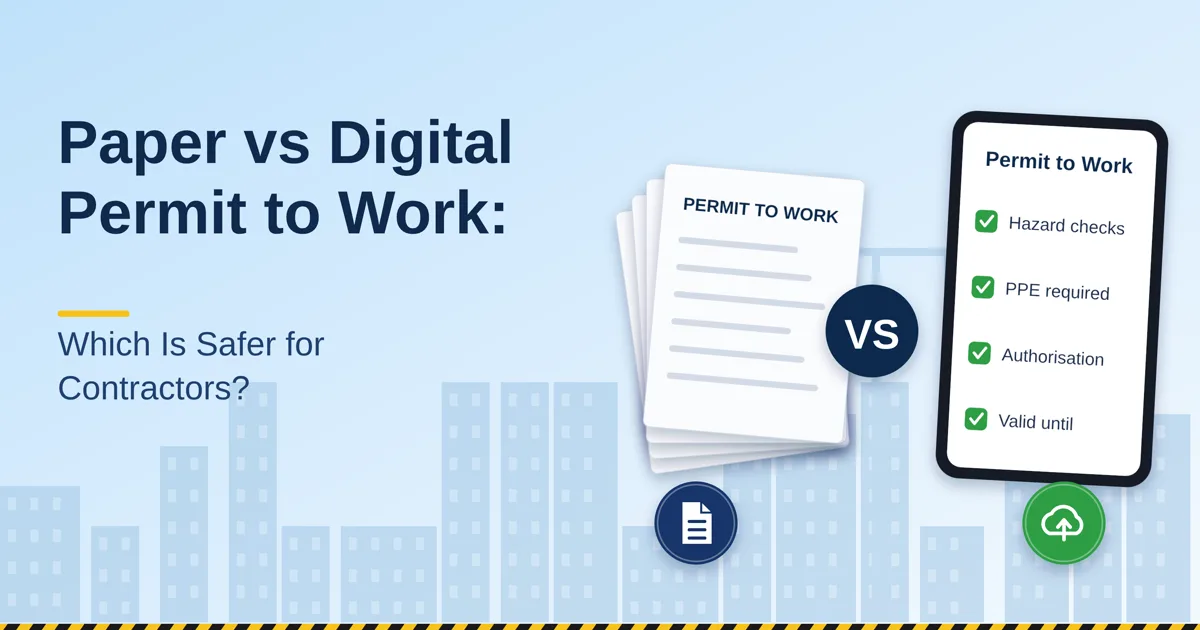
Paper vs Digital Permit to Work: Which Is Safer for Contractors?
Compare paper permits with digital permit to work software and see how digital workflows can improve contractor safety, tracking and compliance.
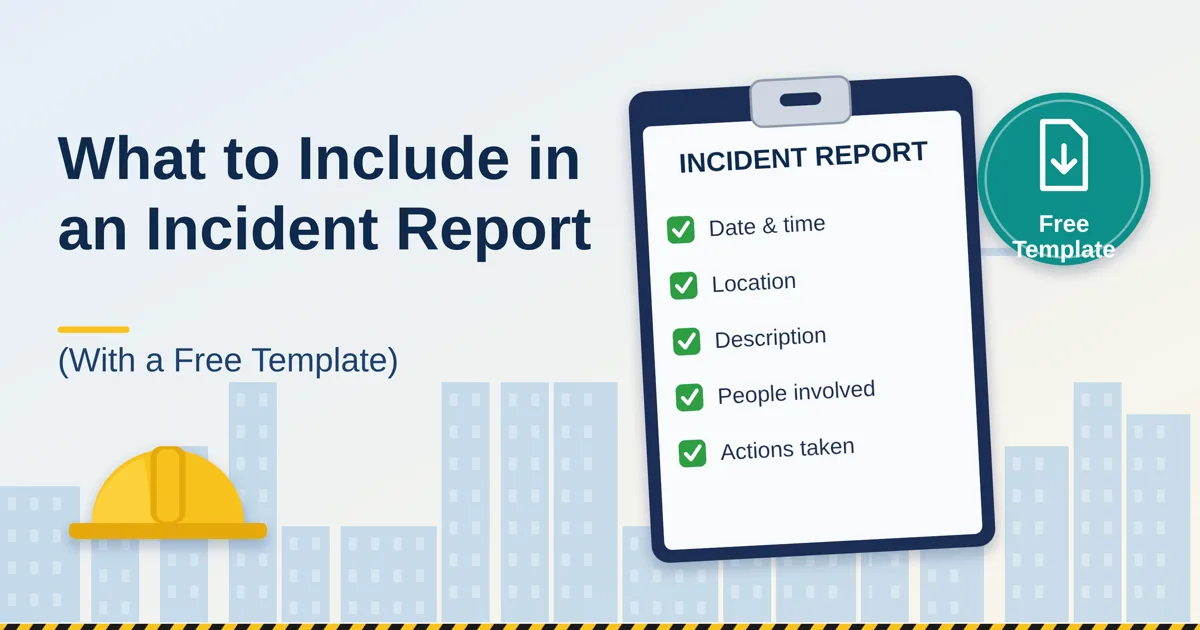
What to Include in an Incident Report (With a Free Template)
See what to include in an incident report and how incident reporting software helps capture details, actions and evidence consistently.